


📜 AISW #052: Annie Ridout, UK-based freelance writer and creative entrepreneur
Interview with Annie Ridout, UK-based freelance writer and creative entrepreneur, on her stories of using AI and how she feels about AI using people's data and content


Introduction -
This post is part of our AI6P interview series on “AI, Software, and Wetware”. Our guests share their experiences with using AI, and how they feel about AI using their data and content. (This is a written interview; read-aloud is available in Substack.)
Note: In this article series, “AI” means artificial intelligence and spans classical statistical methods, data analytics, machine learning, generative AI, and other non-generative AI. See this Glossary and “AI Fundamentals #01: What is Artificial Intelligence?” for reference.
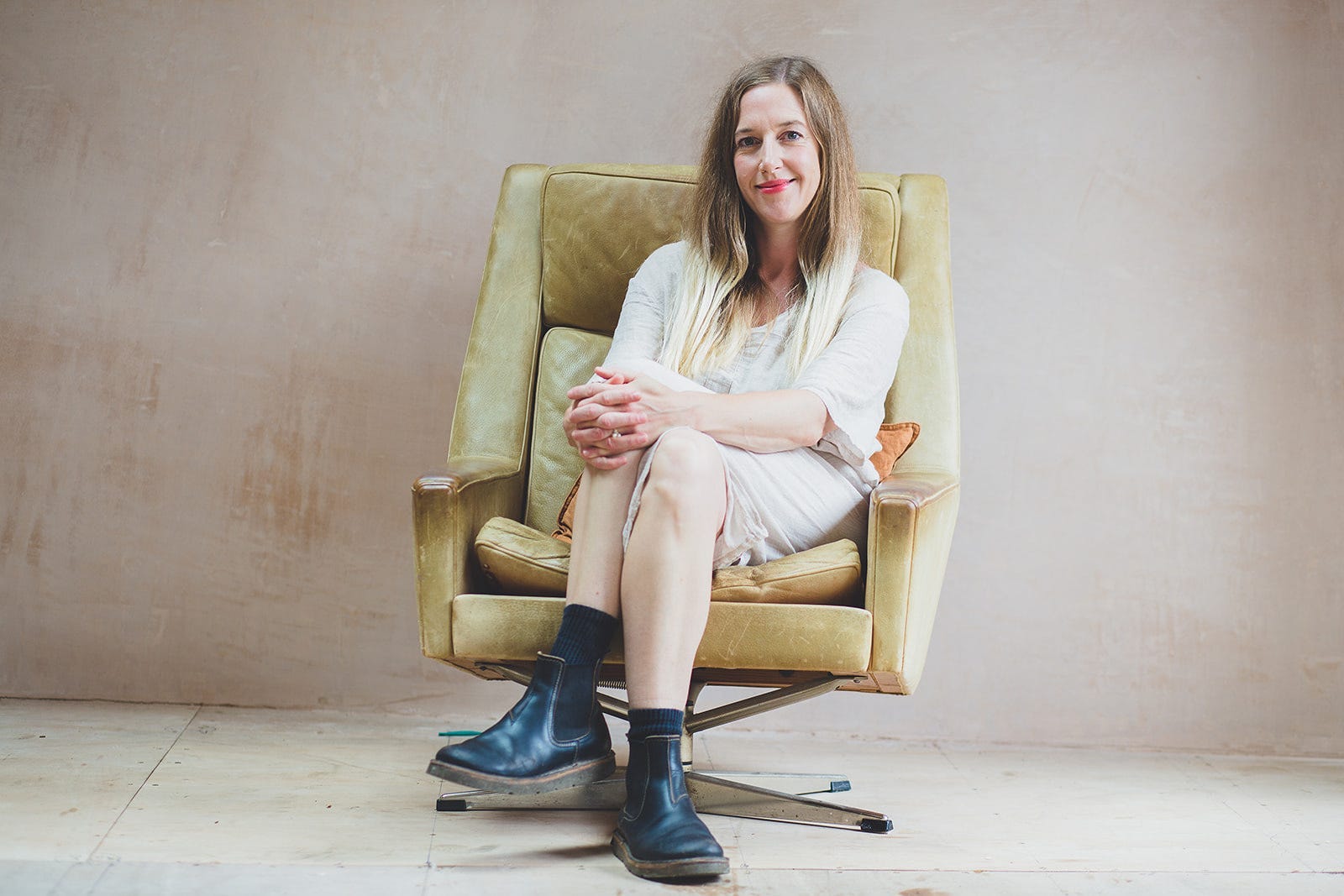
Interview - (she/her)
I’m delighted to welcome Annie Ridout from London, UK as my next guest for “AI, Software, and Wetware”. Annie, thank you so much for joining me on this interview! Please tell us about yourself, who you are, and what you do.
As a non-fiction author, I’ve had three books published: Raise your SQ (2023), Shy (2021), The Freelance Mum (2019). I’m also a freelance journalist and I’ve written for the Guardian, Red Magazine, Telegraph, Grazia and most other national newspapers and women’s magazines. And I write The Creative Way on Substack - all about living and working creatively.
Then, I teach everything I know about writing, business and creativity in online courses and through coaching/consultancy. So, that’s the career side of my life. But I’m also a mum to three children, aged 10, eight and five. Two are at school, one is homeschooled at the moment. Since learning about neurodivergence through my children, I’ve started writing about this, too - @raising_neurodivergence on Instagram and Raising Neurodivergence on Substack. It’s become my special interest. We live in London.
Annie, thank you for sharing that background. It’s inspiring to see that you’ve been so successful in your books, your newsletters, courses, shop, and other dimensions of your writing!
And it’s so interesting that you’re learning about neurodivergence through your kids, and writing about it. As you know, I work in AI, and one thing I learned as an AI leader is that neurodivergence is even more common among people who work in AI than in other fields. So I tried to learn as much as possible about how to build and support neurodiverse teams, and I wrote an article about it last summer.
One excellent article I just read this week here on Substack by was about the spectrum concept, and how labels like “low/high functioning” and “level 1-3” are ableist and not helpful. She recommends that we should talk about neurodivergent people not in terms of perceived shortcomings, but in positive terms, about what supports they respond well to. Like, “thrives with written instructions”. What are your thoughts on that?
I love that approach. I don’t really talk about the spectrum and I certainly never refer to someone as being on the spectrum, as this phrase is outdated and it has become derogatory. Though, there is a spectrum in terms of how an autistic person experiences life, but it’s a complex combination of factors, not just high or low. Similarly, ‘high and low functioning’ are also no longer used, as terms, as they’ve been replaced by ‘high/low support needs’ but there is also a question mark over those terms, as many neurodivergent people’s needs fluctuate.
My approach to raising neurodivergent children is to be open-minded, curious, to educate myself and to always remain hopeful.
Many of the posts I’ve been sharing on Instagram around neurodivergence are being viewed by hundreds of thousands, and sometimes millions of people. The message I am putting out is that our children bring something important to society. A different way of being, thinking, responding and communicating. When I say ‘different’, I mean different to the so-called neurotypical way of doing things.
There is a lot of support for this message, but I’m also being trolled more than I’ve ever been trolled before. There are people out there who are scathing about the positive message I want to spread, and it really highlights something deeply concerning about how neurodivergence is viewed by the general population. There is a lot of educating still to be done.
Getting back to AI, what is YOUR level of experience with AI, ML, and analytics? Have you used it professionally or personally, or studied the technology?
I don’t knowingly engage with AI and I never use it for writing. I’m pretty old-school when it comes to writing - I like a notepad and pen, and if I’m writing online, I don’t use AI to correct my spelling or grammar. In fact, I find it really annoying when it’s switched on because it miscorrects so often. That said, I know that AI feeds into most of our lives in subtle ways, so I’m certainly relying on it when it comes to the technology side of my business (which is all online, and largely based around social media). And in my private life.
I understand that! I’ve talked with a lot of people who want to keep their writing ‘by their own hand’. And even some people who are fans of AI tools have griped about auto-correct fails and annoying grammar checkers. Me, I’m one of those people who keeps auto-correct turned off on my phone 😉
Can you share a specific story on how you have used a tool that included AI or ML features? What are your thoughts on how the AI features [of those tools] worked for you, or didn’t? What went well and what didn’t go so well?
When my third baby was born, I got a Kindle for the first time. I’d always been into proper books but now, I knew I’d be lying in bed breastfeeding a lot and I wanted to be able to read in the dark. I bought the first novel that had been recommended and after that, the algorithm sent me so many brilliant book recommendations. I read about 10 books, back-to-back, and they were all so perfectly selected by, presumably, AI.
Thank you for sharing your experience with the Kindle and liking its book recommendations. So that would have been about 5 years ago - I guess before all of the AI-generated books began flooding Amazon recently ;) I’m wondering if you give Amazon active feedback on books you read - like, do you ever “Recommend this Book” or post book reviews on Amazon?
I often leave reviews on Amazon after reading books. As an author myself, I know how important this is, as lots of good reviews will lead to more book sales. This matters in financial terms, but also in respect of whether or not you get another book deal.
Do you still read books on Kindle, now that your kids are getting older? If so, do you find that Amazon’s ebook recommendations still hold up?
I still read novels on my Kindle at night. And then I read paperback non-fiction books in the morning, while I’m drinking my coffee. The recommendations aren’t as good as they used to be, for some reason. And so now, I am working my way through the Women’s Prize for Fiction longlist.
I don’t have many gadgets in my house but I have a TV and I subscribe to Netflix, so again, I rely on AI helping me to choose the next drama to watch. I also subscribe to Spotify and love the playlists that are recommended to me. And when I’m out and about, I use Google Maps to find the best route to walk or drive.
Netflix, Spotify, and Google apps are all good examples of AI in our everyday lives. I’m curious: one thing I’ve read and heard from musicians is that AI-generated songs have been crowding out music by humans on Spotify. Do you know if any of the songs that have been recommended to you may have been AI-generated? Or do you generally know the musicians Spotify is recommending for your playlist?
I always know the musicians I’m listening to. Often, I find them on Instagram first via a live performance that has been filmed. But my kids like some really shit music that is probably AI-generated, about people farting and similar. It hadn’t actually occurred to me that it’s AI-generated.
That’s funny 😆 If you have avoided using AI-based tools for some things (or anything), can you share an example of when, and why you chose not to use AI?
As I mentioned above, when I’m writing, I avoid anything that will get between me, my mind and the words that roll out. I’m definitely inspired by content I find online, that will often be showing up because of AI (on Instagram, for instance), but AI doesn’t get to directly touch the way my thoughts turn ideas into a piece of writing.
I fully support that. By the way, if you haven’t yet seen the “Created with Human Intelligence” badge initiative that started, you may want to check it out. (The one I use is at the end of this interview.)
I’m wondering if you have heard about the ‘Human Authored Certification’ announcement from the Authors Guild? They are now supporting author members to self-certify that AI was not used for anything except “minimal, trivial uses” in a book. We had a Notes thread on this and one commenter, , mentioned that Writers Guild of Great Britain (WGGB) is a similar organization in the UK. What are your thoughts about that kind of self-certification by authors? Would seeing that self-certification by an author be meaningful to you as a book reader? Would you as a writer want to self-certify your next book?
I don’t know that I would add that badge to my writing. And I’m not sure that it would make a difference to me, as a reader. I assume that a novel I’m reading has been written by the author. If they’ve used AI for spelling and grammar, I don’t need to know that. Or, to be honest, if they’ve used it for help with the plot. But I do want to know that the author is a real person and similarly to the music I listen to, I do tend to know who the author is before I read the book.
Got it. A common and growing concern nowadays is where AI and ML systems get the data and content they train on. They often use data that users put into online systems or publish online. And companies are not always transparent about how they intend to use our data when we sign up.
How do you feel about companies using data and content for training their AI/ML systems and tools? Should ethical AI tool companies be required to get Consent from (and Credit & Compensate) people whose data they want to use for training? (the “3Cs Rule”)
I don’t mind AI being trained in this way, but I do think it should be done with consent. My publishers asked if I would give permission for AI to be trained on my first two books, for a lump sum, and I agreed. I feel confident in my ever-evolving writing style and ability to innovate with words. Also, the fact that I am a real person, with real-life experience, still matters to my community.
I’m happy to hear that you were given a true choice about whether AI was trained on your books, and that you were compensated.
Do you know if that agreement covered use of your words only, or did it also include the audiobook versions (was it your voice, or someone else’s)?
I don’t actually know about the audio version. I narrated my second book, someone else narrated the first one.
(6) As a user of AI-based tools, do you feel like the tool providers have been transparent about sharing where the data used for the AI models came from, and whether the original creators of the data consented to its use?
No, I don’t think we are told where these ideas come from. I use Canva to design posts for Instagram and when I think about it now, perhaps that website has been trained on AI, pulling ideas from designers.
Yes, Canva is one of the design tool providers that uses AI. When I first started digging deeply into AI ethics last year, Canva looked like one of the more ethical design tool providers. And when there was that big uproar about Adobe’s ethics last summer, I looked into Affinity by Serif as an affordable alternative and put them on my ‘ethical shoestring’ list - they looked pretty good. But it came out that Canva acquired them and acquired Leonardo AI in July 2024, and some questions came up then about their ethics and plans. So I didn’t pursue buying an Affinity license. I haven’t looked into Canva’s ethics since then.
I noticed that most of your newsletter posts have your own drawings - which are cool! - or what look like stock images. Do you ever use Canva for making post images for your Substack newsletter? Or have you tried the built-in Substack options for adding free stock images from Unsplash, or generating an image?
I draw my own images for The Creative Way Substack and don’t use any stock images. For the Raising Neurodivergence Substack, I used a post template that my sister, a designer, created for me. But occasionally, I’ll use a stock image - of a pile of books, for instance - and change it to the brand colours.

That’s a great drawing! Thank you for sharing it here.
As consumers and members of the public, our personal data or content has probably been used by an AI-based tool or system. Do you know of any cases that you could share (without disclosing sensitive personal information, of course)?
No.
Do you know of any company you gave your data or content to that made you aware that they might use your info for training AI/ML?
No.
Or have you ever been surprised by finding out that a company was using your info for AI? It’s often buried in the license terms and conditions (T&Cs), and sometimes those are changed after the fact.
A lot of us were angry with Meta for using our content to train AI, without getting our proper consent. I deleted thousands of my posts, in protest.
Did you feel like you had a real choice about opting out, or about declining the changed T&Cs?
No.
Yeah, I never did join Instagram because I didn’t like their privacy policies, but I did purge my personal Facebook account last summer. I deleted just about everything I’d put there over the past 15+ years. It was my only real option when they refused to honor my opt-out request. I know a lot of people who just left FB completely. But I know some who feel they can’t leave because they’ve established a business presence there. It sounds like Instagram is like that for you, maybe?
I recently deleted my Facebook completely (not for the first time - I did this about 15 years ago, too). Twitter (or ‘X’), too. But yes, Instagram is part of my business. I’ve grown a community there under my own name, and now I have a very fast-growing community around the words I’m sharing on neurodivergence. I’m not leaving the platform just yet, but I’m not afraid to have some time away, or pause awhile.
Has a company’s use of your personal data and content created any specific issues for you, such as privacy, phishing, or loss of income? If so, can you give an example?
Not that I know of.
That’s good to hear! So your phone number and email address haven’t been sold to data brokers, you haven’t gotten spam or junk calls or texts?
Ha - yes, I’ve definitely experienced spam calls, emails and texts. But it doesn’t happen very often and I’m not sure who sold that information.
Yeah, sometimes it’s really hard to tell where those people get our data.
Public distrust of AI and tech companies has been growing. What do you think is THE most important thing that AI companies need to do to earn and keep your trust? Do you have specific ideas on how they can do that?
They can keep reminding people that there’s space for AI and for the real human experience. It doesn’t need to be one or the other. When I hear people saying that AI will take over and the human race will no longer exist, I roll my eyes. I think this is a really pessimistic attitude and that we can take a more optimistic view on it all.
I agree - I think the extreme views on both ends, hype and doom, are unrealistic and not helpful. I try to encourage people to think of AI as ‘Augmented Intelligence’ or ‘Automated Intelligence’ that complements human intelligence. So, like you said, not one or the other.
Anything else you’d like to share with our audience?
I mentioned my books and Substacks at the start. I also have an Instagram account under my own name, @annieridout, where I share poetry and poetic passages about… the human experience. The engagement has dropped a lot recently, since I deleted all those posts, but I don’t regret it. We need to exercise our power and freedom within these technologies, sometimes.

Agreed! Annie, thank you so much for sharing your experiences and time for this interview. I’ll embed the links to your Substacks and your IG here so that people know where to find you. I wish you continued success in all of your writing!
Interview References and Links
Annie Ridout’s website
Annie Ridout’s Instagrams: neurodivergence, personal (poetry)
Annie Ridout on LinkedIn
’s newsletters on Substack:


Sample posts from The Creative Way:
About this interview series and newsletter
This post is part of our AI6P interview series on “AI, Software, and Wetware”. It showcases how real people around the world are using their wetware (brains and human intelligence) with AI-based software tools, or are being affected by AI.
And we’re all being affected by AI nowadays in our daily lives, perhaps more than we realize. For some examples, see post “But I Don’t Use AI”:

We want to hear from a diverse pool of people worldwide in a variety of roles. (No technical experience with AI is required.) If you’re interested in being a featured interview guest, anonymous or with credit, please check out our guest FAQ and get in touch!
6 'P's in AI Pods (AI6P) is a 100% reader-supported publication. (No ads, no affiliate links, no paywalls on new posts). All new posts are FREE to read and listen to. To automatically receive new AI6P posts and support our work, consider becoming a subscriber (it’s free)!
Series Credits and References
Microphone photo by Michal Czyz on Unsplash (contact Michal Czyz on LinkedIn)

Credit to CIPRI (Cultural Intellectual Property Rights Initiative®) for their “3Cs' Rule: Consent. Credit. Compensation©.”
Credit to
for the “Created With Human Intelligence” badge we use to reflect our commitment that all content in these interviews will be human-created:
If you enjoyed this interview, my guest and I would love to have your support via a heart, share, restack, or Note! One-time tips or voluntary donations via paid subscription are always welcome and appreciated, too 😊
 | A guest post by
|
thanks so much for having me x
Thanks for the shoutout!